Congestion
Terms
Incipient Congestion
- Happens from multiplexing
- Statistical burst of traffic
- Sometimes packets, buffer or drop
- Irrespective of a long-term load
Persistent Congestion
- Over-Subscription
- Packet loss
CC — Congestion Control
AQM — Active Queue Management
- Prevents the queue from filling even faster
- Drops packets selectively
RED — Random Early Detection
- Based on Queue Depth
- Queue is 100 packets
- 30 packets, drop rate of a new packet is 20%
- 50 packets, drop rate is 50%
- 100 packet, drop rate is 100%
- Queue is 100 packets
Congestion Collapse
- Badly designed protocols react to congestion by trying to send faster or more often.
TCP’s implementation of CC is responsible for the Internet not suffering from Congestion Collapse.
TCP
- ECN is marked
- Dropped packets cause streams to slow down.
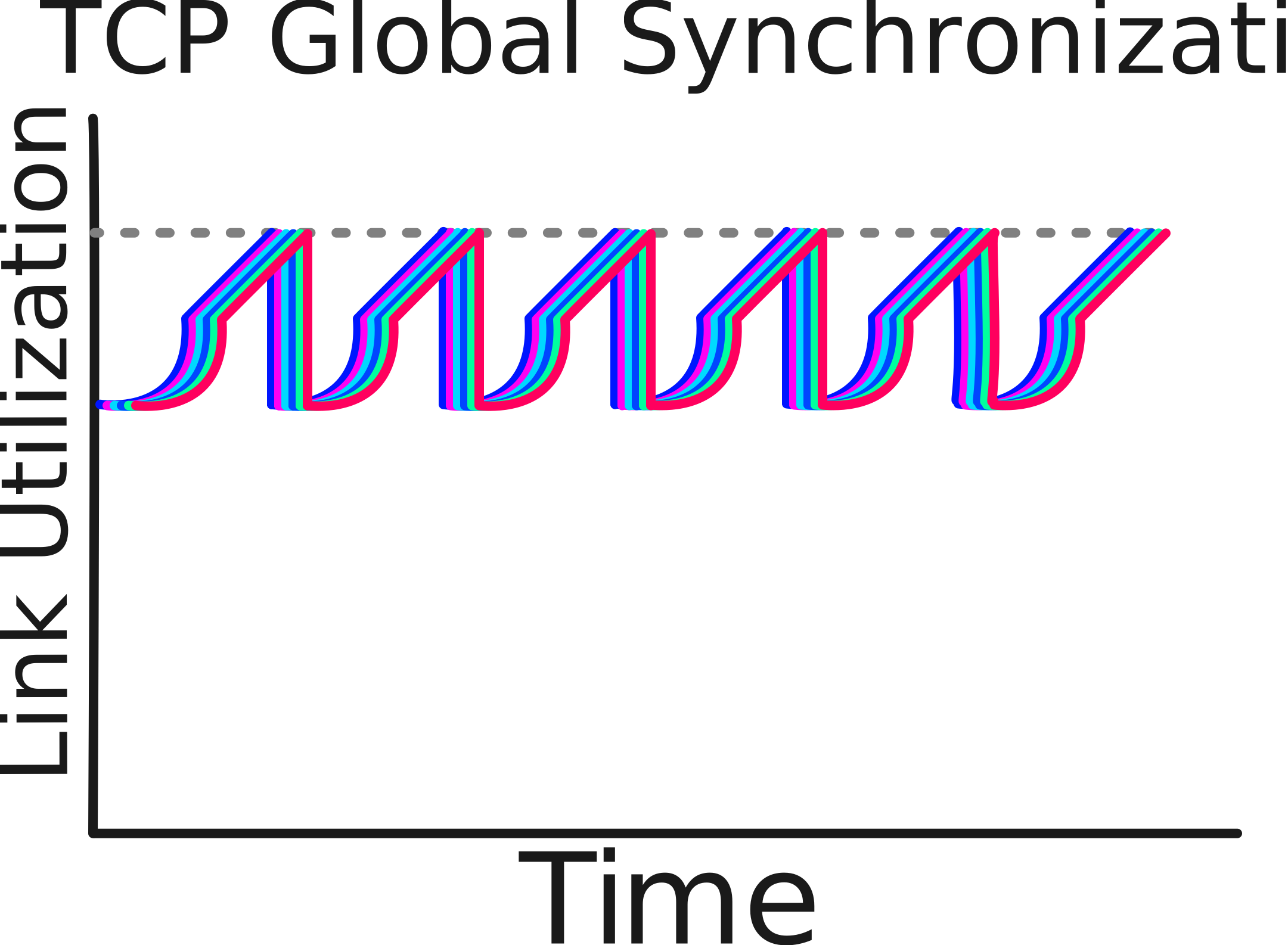
Global Synchronization
TCP on its own, will settle into this pattern, when the queues fill, multiple flows all speeding up and slowing down around the same period.
References
RFC 7567: IETF Recommendations Regarding Active Queue Management | RFC Editor
RFC 7141: Byte and Packet Congestion Notification | RFC Editor
Random Early Detection Gateways for Congestion Avoidance - 1993 IEEE